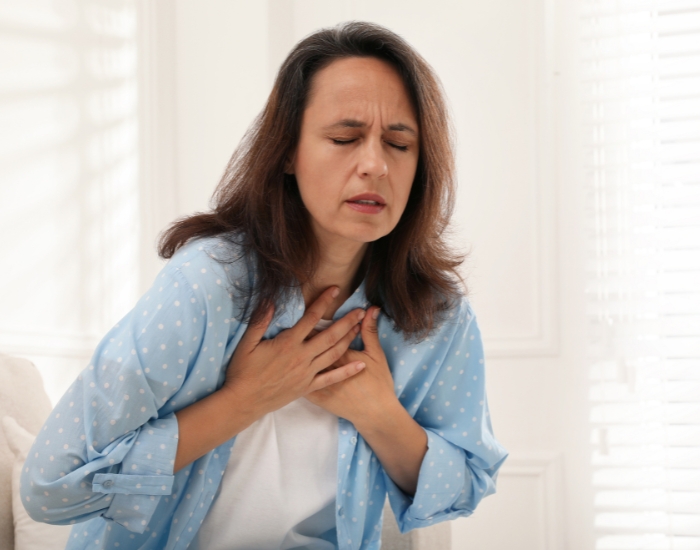
Waking up suddenly at night and struggling to breathe can feel terrifying. Many people sit upright in bed, trying to catch their breath while wondering what just happened. The fear often grows stronger when the cause is unclear.
Should this be ignored until morning? Could it be asthma, allergies, or something more serious?
Nighttime breathing problems create confusion because symptoms appear during sleep when access to regular care may not be available. This uncertainty leads many people to search for answers about shortness of breath at night and whether emergency care is necessary.
While some nighttime breathing problems are mild, others may signal heart or lung conditions that require urgent attention. Understanding what causes breathing difficulty at night can help people recognize when symptoms become an emergency.
What Causes Shortness of Breath at Night?
Breathing problems during sleep occur for several different reasons. Some conditions affect the airways, while others affect heart function or breathing patterns.
Common causes of shortness of breath at night include:
-
Asthma flare ups
-
Sleep apnea
-
Heart failure
-
Anxiety or panic attacks
-
Acid reflux
-
Lung infections
-
Allergic reactions
Each condition affects breathing differently. However, when breathing difficulty at night becomes severe or frequent, medical evaluation becomes important.
Why Breathing Problems Often Appear During Sleep
Nighttime breathing changes are not unusual. The body naturally shifts breathing patterns during sleep.
Several factors may contribute to sudden breathlessness during sleep:
-
Muscles relax while sleeping
-
Airway resistance increases slightly
-
Lying flat can affect lung expansion
-
Heart and lung circulation changes during rest
For most people, these changes are minor. However, certain medical conditions can worsen breathing during sleep.
This explains why some individuals experience shortness of breath even if daytime breathing feels normal.
Symptoms That May Occur With Shortness of Breath at Night
Nighttime breathing problems may appear with other symptoms that provide clues about the cause.
Common symptoms include:
-
Waking up gasping for air
-
Chest pressure or discomfort
-
Wheezing
-
Coughing during the night
-
Rapid heartbeat
-
Swelling in the legs or ankles
-
Loud snoring
-
Sudden anxiety or panic
If shortness of breath occurs frequently or worsens over time, medical evaluation becomes increasingly important.
When Shortness of Breath at Night Becomes an Emergency
Occasional nighttime breathing discomfort may not require urgent care. However, certain symptoms indicate a medical emergency.
Immediate evaluation is recommended if the trouble breathing at night occurs with:
-
Severe chest pain
-
Sudden choking sensation
-
Blue lips or skin
-
Confusion or difficulty staying awake
-
Severe wheezing
-
Fainting or dizziness
-
Rapid swelling of the throat or face
These symptoms may signal serious conditions such as heart attack, pulmonary embolism, severe asthma attack, or allergic reaction.
Emergency care near me allows doctors to evaluate breathing and stabilize symptoms quickly.
Conditions Doctors Consider With Shortness of Breath at Night
Medical professionals evaluate several possible causes when someone experiences shortness of breath at night.
Heart Related Conditions
Heart problems can cause fluid buildup in the lungs while lying flat.
This condition, sometimes called paroxysmal nocturnal dyspnea, can lead to sudden shortness of breath.
Sleep Apnea
Sleep apnea temporarily stops breathing during sleep. This often causes loud snoring and sudden gasping awakenings.
People with sleep apnea may repeatedly experience shortness of breath at night.
Asthma
Nighttime asthma symptoms are common because airway inflammation can worsen during sleep.
This can cause wheezing and shortness of breath at night.
How Emergency Rooms Evaluate Shortness of Breath at Night
Emergency physicians quickly evaluate breathing problems that occur during sleep.
When patients arrive with shortness of breath at night, evaluation may include:
-
Oxygen monitoring
-
Physical examination
-
Chest imaging
-
Blood tests
-
Heart rhythm monitoring
-
Lung function evaluation
This assessment helps determine whether shortness of breath at night near me is caused by heart disease, lung problems, infection, or sleep related conditions.
Treatment Options for Shortness of Breath at Night
Treatment depends on the cause of symptoms.
Common treatments include:
-
Oxygen therapy
-
Bronchodilators for asthma
-
CPAP therapy for sleep apnea
-
Heart medications
-
Treatment for infections
-
Allergy medications
Once the cause of difficulty in breathing is identified, doctors can create a long-term treatment plan.
Preventing Future Episodes of Shortness of Breath at Night
Some breathing issues can be reduced with proper prevention strategies.
Helpful steps include:
-
Maintaining a healthy weight
-
Managing asthma or lung disease
-
Treating allergies
-
Avoiding smoking
-
Sleeping with proper head elevation
-
Managing heart health
Patients who frequently experience trouble breathing at night should discuss long term care with their healthcare provider.
Who Should Treat Shortness of Breath at Night?
Depending on the cause, several medical professionals may be involved.
These include:
-
Primary care physicians
-
Pulmonologists
-
Cardiologists
-
Sleep medicine specialists
However, sudden or severe breathing difficulty at night should always be evaluated in an emergency room first.
Emergency care ensures breathing is stabilized and serious conditions are ruled out.
FAQs
Is shortness of breath at night dangerous?
It can be. Some cases are mild, but others may signal heart or lung conditions.
Can sleep apnea cause shortness of breath at night?
Yes. Sleep apnea commonly causes sudden breathing interruptions during sleep.
Should someone go to the ER for shortness of breath at night?
If symptoms are severe, sudden, or accompanied by chest pain, emergency care is recommended.
Why does breathing feel worse when lying down?
Lying flat can affect lung expansion and circulation, which may worsen symptoms.
Can anxiety cause shortness of breath at night?
Yes. Panic attacks and nighttime anxiety can cause breathing discomfort.
Final Thoughts
Breathing problems that appear during sleep can be frightening and confusing. While some causes of shortness of breath at night are mild, others may signal serious medical conditions that require urgent care.
Recognizing warning signs helps individuals respond quickly when symptoms appear. If nighttime breathing becomes severe, persistent, or accompanied by other concerning symptoms, emergency evaluation may be the safest option.
Medical Disclaimer:
This content is for educational purposes only and does not replace professional medical advice, diagnosis, or treatment. Anyone experiencing severe symptoms or medical concerns should seek immediate medical care from a qualified healthcare professional.