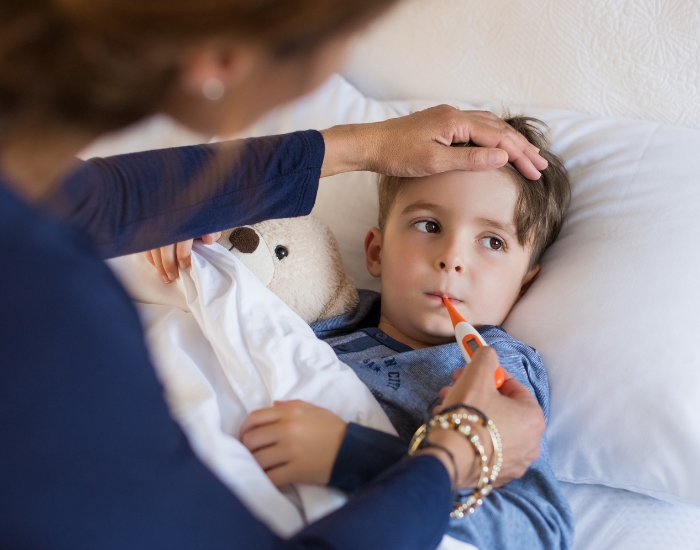
You touch your child’s forehead and immediately know something isn’t right.
They’re flushed. Tired. Not acting like themselves.
You grab the thermometer.
103.5°F.
Now your mind starts racing.
Should I wait?
Should I call the pediatrician?
Should I go to urgent care?
Or is this an emergency?
Every parent has experienced this moment. Fever is one of the most common reasons children visit a doctor or emergency room. Most fevers are caused by common viral infections and improve with rest, fluids, and fever-reducing medication.
However, some fevers can signal a serious medical condition that requires immediate medical attention.
Quick Answer: When Is a Fever Dangerous for a Child?
A fever can become dangerous when it occurs in a baby younger than 3 months, rises above 104°F, causes a seizure, or is accompanied by difficulty breathing, dehydration, severe headache, stiff neck, confusion, persistent vomiting, unusual sleepiness, or rash.
If your child appears very ill or your parental instinct tells you something is wrong, seek emergency medical care immediately.
Heights Emergency Room Houston provides 24/7 pediatric emergency care with no wait times, board-certified emergency physicians, advanced imaging, on-site laboratory testing, and rapid treatment for children of all ages.
What Is Considered a Fever in Children?
A fever is generally defined as a body temperature of 100.4°F (38°C) or higher.
Fever itself is not a disease. It is usually a sign that your child’s immune system is fighting an infection.
Common causes include:
- Cold and flu viruses
- COVID-19
- RSV
- Ear infections
- Strep throat
- Pneumonia
- Urinary tract infections
- Gastrointestinal infections
- Other viral and bacterial illnesses
Most childhood fevers improve within a few days. However, the symptoms associated with the fever are often more important than the actual temperature.
Important: A child with a temperature of 103°F who is alert, drinking fluids, and interacting normally may be less concerning than a child with a temperature of 101°F who is lethargic and difficult to wake.
When Is a Fever Dangerous?
Parents should seek emergency care if a fever is accompanied by any of the following symptoms:
Difficulty Breathing
- Rapid breathing
- Wheezing
- Chest retractions
- Blue lips
- Difficulty speaking or crying
Breathing difficulties can indicate a serious respiratory infection or other medical emergency.
Seizures
A febrile seizure can occur when a child’s temperature rises quickly.
Seek emergency care if:
- The seizure lasts longer than 5 minutes
- The child has trouble breathing
- The child does not return to normal afterward
- This is the child’s first seizure
Severe Dehydration
Watch for:
- No urination for 8-12 hours
- Dry mouth
- No tears when crying
- Sunken eyes
- Extreme weakness
Children can become dehydrated much faster than adults.
Stiff Neck or Severe Headache
Fever combined with a stiff neck, severe headache, confusion, or sensitivity to light requires immediate medical evaluation.
Extreme Sleepiness or Confusion
If your child is difficult to wake, confused, unusually lethargic, or not responding normally, seek emergency care immediately.
Rash With Fever
A rapidly spreading rash, purple rash, or rash that does not fade when pressed should be evaluated immediately.
Fever by Age: When Parents Should Worry
Infants Younger Than 3 Months
Any fever of 100.4°F or higher in a baby younger than three months is considered a medical emergency.
Newborns and young infants have immature immune systems and can become seriously ill very quickly.
Babies 3 to 12 Months
Seek medical care if your child has:
- Fever above 102°F
- Poor feeding
- Persistent vomiting
- Difficulty breathing
- Extreme irritability
- Unusual sleepiness
Toddlers and Older Children
For older children, behavior is often more important than the actual temperature reading.
If your child is drinking fluids, urinating normally, making eye contact, and acting relatively normal between fever spikes, the illness may be less severe.
Signs of Dehydration Every Parent Should Know
Dehydration is one of the most common complications of fever.
Warning signs include:
- Dry lips and mouth
- No tears when crying
- Decreased urination
- Sunken eyes
- Dizziness
- Extreme fatigue
- Refusal to drink fluids
Prompt treatment can prevent dehydration from becoming severe.
When Your Child Needs the ER Right Now
Go to the Emergency Room Immediately If Your Child Has:
- Difficulty breathing
- Seizure
- Severe dehydration
- Stiff neck
- Confusion or extreme sleepiness
- Persistent vomiting
- Severe headache
- Rash with fever
- Severe abdominal pain
- Blue lips or skin
- Fever above 104°F
- Any fever in a baby younger than 3 months
Parents often say, “I just knew something was wrong.”
Trust your instincts. You know your child better than anyone.
Urgent Care vs Emergency Room
Urgent Care May Be Appropriate For:
- Mild fever
- Minor cold symptoms
- Sore throat
- Ear infections
- Mild viral illnesses
Emergency Room Is Recommended For:
- High fever with serious symptoms
- Breathing difficulties
- Seizures
- Severe dehydration
- Altered mental status
- Infants younger than 3 months with fever
- Serious infections
Why Parents Choose Heights Emergency Room Houston
When your child is sick, every minute matters.
At Heights Emergency Room Houston, we provide:
- Open 24 Hours a Day, 7 Days a Week
- No Wait Time Emergency Care
- Board-Certified Emergency Physicians
- Pediatric Emergency Care
- On-Site Laboratory Testing
- CT Scan
- X-Ray
- Ultrasound
- EKG
- IV Fluid Treatment
- Rapid Diagnosis and Treatment
We proudly serve patients throughout Houston Heights, Greater Heights, Timbergrove, Garden Oaks, Oak Forest, Montrose, Washington Avenue, Downtown Houston, and surrounding communities.
What To Expect When You Arrive
Step 1: Immediate Evaluation
Your child is quickly assessed by our emergency team.
Step 2: Private Treatment Room
Your family is brought directly to a private treatment room.
Step 3: Physician Examination
A board-certified emergency physician evaluates your child and develops a treatment plan.
Step 4: Diagnostic Testing
Testing may include:
- Flu testing
- COVID testing
- RSV testing
- Strep testing
- Blood work
- Urinalysis
- X-rays
- Other imaging studies
Step 5: Treatment and Answers
Your child receives prompt treatment and you leave with a clear diagnosis and care plan.
Don’t Wait When Fever Becomes an Emergency
Heights Emergency Room Houston is open 24/7 with no wait time, board-certified emergency physicians, advanced diagnostics, and expert pediatric emergency care.
Walk in anytime for immediate emergency treatment.
Frequently Asked Questions
What temperature is too high for a child?
A fever above 104°F should be evaluated promptly, especially if accompanied by concerning symptoms.
Is a 103°F fever dangerous?
It can be if your child has difficulty breathing, dehydration, seizure, confusion, or other serious symptoms.
Can fever cause seizures?
Yes. Febrile seizures can occur in some children when fever rises rapidly.
When should I take my child to the ER for fever?
Seek emergency care if fever occurs with breathing difficulties, seizure, dehydration, stiff neck, confusion, persistent vomiting, rash, or in babies younger than 3 months.
Can urgent care treat a child’s fever?
Urgent care can treat mild fever and minor illnesses. Serious symptoms require emergency room evaluation.
The Bottom Line
Most childhood fevers are not dangerous and improve with time. However, fever accompanied by breathing problems, dehydration, seizure, confusion, stiff neck, severe headache, persistent vomiting, or unusual sleepiness should never be ignored.
If your child develops serious symptoms or your instincts tell you something is wrong, seek emergency care immediately.
Heights Emergency Room Houston is open 24/7 with board-certified emergency physicians, advanced diagnostics, and pediatric emergency care for children of all ages.
Medical Disclaimer: This article is for informational purposes only and does not replace professional medical advice, diagnosis, or treatment. If you believe your child is experiencing a medical emergency, call 911 or visit the nearest emergency room immediately.