Emergency? We’re open 24/7, no appointment needed.

Call Now
101 N Loop W #300, Houston, TX 77018 (Heights)Open 24/7 — 365 Days a Year(281) 560-4373Get Directions
24/7 STROKE EMERGENCY CARE

Stroke ER in Houston — 24/7 Emergency Evaluation

A stroke is a medical emergency, and every minute counts. The Heights Emergency Room in Houston is open 24/7 with CT imaging, EKG, and lab testing for emergency stroke evaluation.

Open 24/7  •  Walk-Ins Welcome  •  No Appointment Required
WHAT WE OFFER

Emergency Stroke Evaluation, Day or Night

Open 24/7, Even Holidays

Stroke symptoms can start at any hour. We are open every hour of every day.

Walk-Ins Welcome

No appointment or referral is needed for emergency evaluation.

Neurologic Exam

A physician checks speech, strength, vision, balance, and facial movement.

CT Imaging

A head CT can show bleeding in the brain and other emergencies.

EKG & Lab Tests

An EKG can detect an irregular rhythm, and blood tests help narrow the cause.

Near Houston Heights

101 N Loop W #300, Houston, TX 77018, on the North Loop.
Stroke outcomes depend on how quickly care starts. When in doubt, call 911—don’t wait to see whether symptoms pass.
STROKE WARNING SIGNS

How Do You Recognize a Stroke?

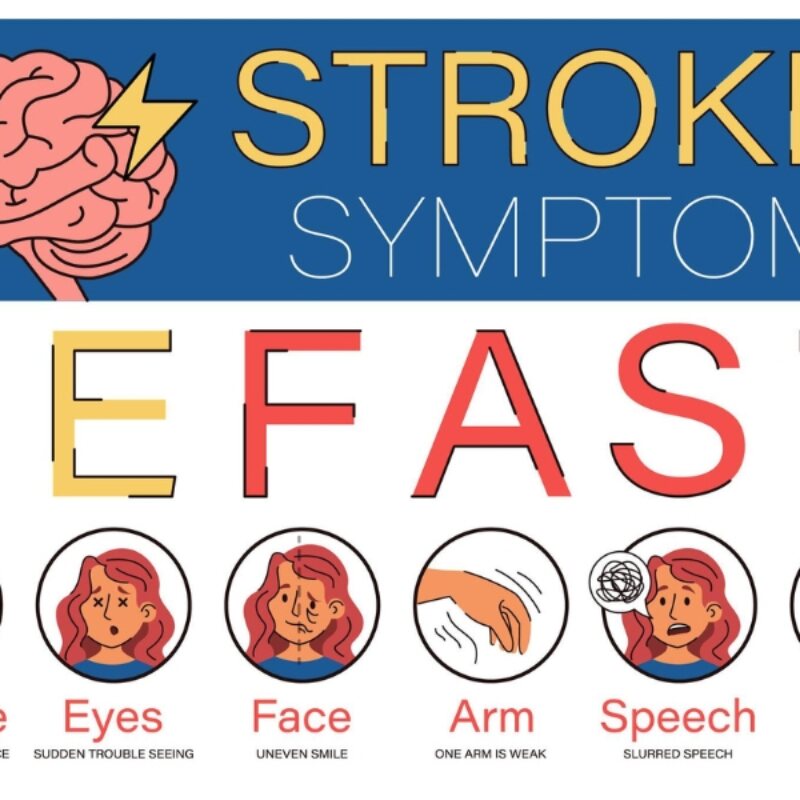
Think BE-FAST: sudden loss of Balance, sudden Eye or vision changes, Face drooping, Arm or leg weakness, Speech difficulty, and Time to call 911. Any one of these appearing suddenly can signal a stroke, even if it seems mild or begins to improve.
A stroke happens when blood flow to part of the brain is blocked (ischemic stroke) or a blood vessel in the brain bleeds (hemorrhagic stroke). Both can cause lasting disability or death, and brain cells are lost quickly while treatment is delayed. That is why stroke is treated as a time-critical emergency, and why symptoms should never be “slept off.”

Call 911 for sudden:

PATIENT REVIEWS

What Patients Say About The Heights Emergency Room

4.7
★★★★★
Based on 664 Google reviews (as of October 2026)
Patients frequently mention a welcoming atmosphere and a clean facility.
E
Erika M. on Google
★★★★★
My sister went into anaphylactic shock while at work and her airway started to close. When we walked in the receptionist took one look at her swelling and ushered us to a medical suite. … I am immensely grateful to the care staff here. Their professionalism and efficiency went a long way to keep my sister calm during the whole process.
K
Kendi on Google
★★★★★
I had a great experience at The Heights Emergency Room after a head injury. … Dr. Zahid was very thorough in his evaluation and took the time to explain everything clearly. … I’m very grateful for the excellent care I received and would highly recommend The Heights Emergency Room!
A
Ahson W. on Google
★★★★★
Very good service. I brought my son here and they very quickly attended to him. … Abdullah took my son’s blood and Pablo administered the CT scan. … Dr. Khan explained the results thoroughly and professionally.
M
Michelle R. on Google
★★★★★
I had a great experience at this ER. The facility was very clean, and the staff was attentive, professional, and compassionate. They took the time to listen to my concerns and made sure all of my needs were addressed. I felt well cared for throughout my visit.
S
Samantha M. on Google
★★★★★
The staff here are amazing!! I had an embarrassing and painful health issue. … This staff made me feel so comfortable and supported through the pain, I didn’t feel embarrassed. … I left feeling heard, educated, and 1000% better!

Need emergency care now?

The Heights Emergency Room is open 24 hours a day, 7 days a week, including holidays. No appointment needed.
Reviews reflect individual patient experiences; care and outcomes vary.

Think It Might Be a Stroke?

Call 911 first. The Heights Emergency Room is open 24/7 for emergency evaluation, with no appointment needed.
Every minute matters—don’t wait for symptoms to pass.

Common Stroke Symptoms

Stroke symptoms usually appear suddenly and often affect one side of the body.

Possible signs

Symptoms that come and go can still be a warning. See our page on stroke symptoms and mini-strokes.

Who Is at Higher Risk?

Anyone can have a stroke, but some factors raise the risk.
High blood pressure is the leading risk factor, followed by diabetes, high cholesterol, smoking, obesity, and an irregular heartbeat such as atrial fibrillation. A prior stroke or mini-stroke, a family history of stroke, and older age also raise risk.
Strokes can occur in younger adults and, rarely, in children. Never assume symptoms are too mild, or a person too young, for a stroke.

Ischemic Stroke

Most strokes are caused by a blockage.
An ischemic stroke occurs when a clot or a narrowed vessel cuts off blood flow to part of the brain. Clots can form in the brain’s arteries or travel there from the heart or the arteries of the neck.
Hospitals with stroke capabilities can use treatments that restore blood flow when they are started quickly and are appropriate. A physician decides based on timing, imaging, and medical history.

Hemorrhagic Stroke

Bleeding in or around the brain.
A hemorrhagic stroke happens when a weakened blood vessel ruptures. It often causes a sudden, severe headache, vomiting, and a rapid drop in alertness.
A CT scan of the head is the standard test to look for bleeding, which is why imaging is one of the first steps in an emergency stroke evaluation.
STROKE MIMICS

Conditions That Can Look Like a Stroke

Not every sudden neurologic symptom is a stroke, but it should be treated like one until a medical evaluation says otherwise.
Low blood sugar, seizures, migraine with aura, infections, and inner-ear problems can cause weakness, confusion, or speech changes that resemble a stroke. Only an exam and testing can sort these out, which is why symptoms should not be self-diagnosed.
Checking blood sugar is one of the first steps in an emergency evaluation, because a very low glucose level can cause stroke-like symptoms and is quickly treatable. If your main symptom is severe dizziness or a sudden headache, see our headache and dizziness page.
YOUR ER VISIT

What Happens When You Visit the ER for Possible Stroke Symptoms?

Suspected stroke is handled as a priority. The team checks your vital signs, blood sugar, and neurologic function, and asks when your symptoms began or when you were last known to be well.

Neurologic Exam

A physician checks your speech, vision, strength, coordination, and facial movement.

CT Imaging

A CT scan of the head can show bleeding in the brain and other emergencies.

EKG & Lab Tests

An EKG can detect an irregular heart rhythm, and blood tests help find other causes.
Patients who need hospital-level stroke care are transferred, and our staff arranges ambulance transport. Calling 911 may be faster, because paramedics can take you straight to an appropriate hospital.

What Can Cause a Stroke?

A stroke can result from:

Heart Rhythm Problems

Atrial fibrillation can let clots form in the heart and travel to the brain.

Blocked or Narrowed Arteries

Plaque in the neck or brain arteries can restrict or block blood flow.

Uncontrolled Blood Pressure

Very high pressure can damage or rupture blood vessels in the brain.

Other Factors

Diabetes, high cholesterol, smoking, clotting disorders, and some medications.
Stroke warning signs evaluation at The Heights Emergency Room in Houston
This list is general information, not a diagnosis. Only a medical evaluation can determine the cause.
QUICK ANSWERS

Stroke Questions, Answered

What should I do if I think someone is having a stroke?

Call 911 immediately, note the time symptoms started, and keep the person calm and still. Don’t give food, drink, or medication unless the 911 dispatcher says to, and don’t drive them yourself. Paramedics can begin care on the way and alert the receiving hospital.

Where should I go in Houston for stroke symptoms?

Call 911 first. Paramedics can take you to an appropriate hospital. The Heights Emergency Room at 101 N Loop W #300, Houston, TX 77018, is open 24/7 with CT imaging, EKG, and lab testing, and our team can begin an emergency evaluation and arrange transfer when hospital-level care is needed.

Can a stroke happen without a headache?

Yes. Most strokes caused by a blockage do not cause a headache. Typical signs are one-sided weakness or numbness, a drooping face, speech trouble, or vision loss. A sudden, severe headache is more typical of a bleeding stroke, but any sudden new symptom should be treated as an emergency.

Should I go to the ER if stroke symptoms go away?

Yes. Symptoms that clear within minutes can be a mini-stroke (TIA), which is a warning that a full stroke may follow in the coming hours or days. Call 911 or go to an emergency room right away, even if you feel normal again.

Can an ER tell if I’m having a stroke?

An emergency physician can look for stroke with a neurologic exam, blood sugar check, EKG, and a CT scan of the head. A CT can show bleeding, and additional testing may be needed to confirm a blockage. Patients who need stroke-specific hospital care are transferred.
EMERGENCY SAFETY

When Should You Call 911 for Stroke Symptoms?

Call 911 immediately for any sudden stroke symptom, even if it seems mild or begins to improve.

Call 911 for:

Paramedics can start care on the way, check blood sugar, and alert the hospital so the team is ready when you arrive.
Never drive yourself or someone who may be having a stroke; symptoms can worsen suddenly.
WHERE TO GO

ER vs Urgent Care for Stroke Symptoms

Urgent care centers are not equipped to diagnose or treat a stroke. Any sudden stroke symptom needs 911 or an emergency room, not an urgent care visit or a call to your doctor’s office.

Call 911

Go to the ER

Doctor’s Office or Urgent Care

If you are unsure, choose the ER.

24/7 Stroke Evaluation in Houston

Stroke symptoms can start at any hour. The Heights Emergency Room is open 24 hours a day, 7 days a week, including holidays.

Emergency Physician Evaluation

Rapid neurologic assessment.

CT Imaging

Head CT to look for bleeding.

EKG

To check heart rhythm.

Lab & Glucose Testing

Blood sugar and blood tests.

Vital Sign Monitoring

Blood pressure and oxygen levels.

Hospital Transfer

Coordinated when admission is needed.
Testing and treatment depend on your symptoms and the physician’s evaluation.

Stroke ER Near Houston Heights

The Heights Emergency Room is a freestanding emergency room at 101 N Loop W #300, Houston, TX 77018, along the North Loop (610). It is open 24 hours a day, 7 days a week for adults and children with stroke symptoms and can be reached at (281) 560-4373.
The Heights Emergency Room
101 N Loop W #300
Houston, TX 77018
Open 24 hours a day, 7 days a week

If you are searching for:

The Heights Emergency Room is open day and night for stroke evaluation.

Serving Houston Heights and Nearby Neighborhoods

Patients with possible stroke symptoms come to us from across central and northwest Houston—including Garden Oaks, Oak Forest, Houston Heights, Timbergrove, Woodland Heights, Independence Heights, the Northside, Rice Military, the Washington Avenue corridor, First Ward, and Downtown. For sudden stroke symptoms, call 911; for other concerns, our North Loop location is a short drive from many of these neighborhoods.
ZIP 77018
Garden Oaks, Oak Forest, and Independence Heights / Central Northwest
ZIP 77008
Houston Heights, Lazybrook, and Timbergrove
ZIP 77009
Heights East, Northside, and the Woodland Heights area
ZIP 77022
Independence Heights and Northline / Northside
ZIP 77007
Washington Avenue, Rice Military, the western and southern Heights, and First Ward
ZIP 77002
Downtown, northern Downtown, and nearby First Ward areas
Travel times vary with traffic and time of day.
FAQ

Stroke ER — Frequently Asked Questions

Balance, Eyes, Face, Arm, Speech, and Time. It is a quick way to remember the most common stroke signs—sudden loss of balance, vision changes, face drooping, arm weakness, and speech difficulty—and that you should call 911 right away.

Not unless 911 or a physician tells you to. Aspirin can be harmful in a bleeding stroke, which can look the same as a blockage. Call 911 and let the medical team decide.

As quickly as possible. Some stroke treatments are time-limited, so noting when symptoms began, or when the person was last seen normal, helps the care team decide what is safe.

Many strokes can be prevented by controlling blood pressure, cholesterol, and blood sugar, not smoking, staying active, and treating atrial fibrillation. Talk with your primary care doctor about your personal risk.

Yes. Strokes are less common in younger adults but do happen, sometimes related to clotting disorders, heart conditions, tears in a blood vessel, or drug use. Any sudden stroke symptom needs emergency evaluation at any age.

No. The Heights Emergency Room is a walk-in emergency room open 24/7. For possible stroke symptoms, call 911 first.

Medical disclaimer: This page provides general health information and is not a substitute for professional medical advice, diagnosis, or treatment.

Think It Might Be a Stroke? Don’t Wait.

Call 911 for sudden face drooping, weakness, or speech trouble. For other concerns, emergency care is available 24/7.
The Heights Emergency Room
101 N Loop W #300, Houston, TX 77018
Note the time symptoms started and share it with paramedics or the ER team.