
Chest Pain ER in Houston — 24/7 Emergency Evaluation
Emergency Care for Chest Pain, Day or Night
Open 24/7, Even Holidays
Walk-Ins Welcome
EKG & Cardiac Evaluation
Advanced Imaging On Site
On-Site Laboratory
Call or Drive to Heights ER
When Should You Go to the ER for Chest Pain?
What Patients Say About The Heights Emergency Room
Need emergency care now?
Concerned About Chest Pain?
Chest Pressure or Tightness Can Be an Emergency
How people often describe it
- Pressure
- Squeezing
- Heaviness
- Tightness
- Fullness
- Burning
- A heavy weight on the chest
Chest Pain and Shortness of Breath
Get emergency care right away for:
- Sudden chest pain with shortness of breath
- Severe breathing difficulty
- Chest pressure while struggling to breathe
- Blue or gray lips or skin
- Fainting or near-fainting
- Confusion
- Coughing up blood
- Rapidly worsening symptoms
Pain Spreading to the Arm, Jaw, Back or Shoulder
Heart Attack Symptoms Can Be Different From Person to Person
Warning signs can include:
- Chest pressure or discomfort
- Shortness of breath
- Pain in the arm, shoulder, jaw, neck, or back
- Breaking out in a cold sweat
- Nausea or vomiting
- Unusual weakness or fatigue
- Dizziness
- Lightheadedness
- Fainting
Chest Pain and Heart Attack Symptoms in Women
Symptoms that may accompany chest discomfort
- Shortness of breath
- Nausea or vomiting
- Unusual fatigue or weakness
- Breaking out in a cold sweat
- Lightheadedness
- Discomfort in the back, jaw, neck, shoulder, or arm
Chest Pain in Older Adults
Watch for chest discomfort along with:
- Weakness
- Shortness of breath
- Fainting or an unexplained fall
- Sweating
- Nausea
- Confusion or a sudden change in alertness
- Unusual fatigue
What Happens When You Visit the ER for Chest Pain?
EKG / ECG
Laboratory Testing
Diagnostic Imaging
What Blood Tests May Be Used to Evaluate Chest Pain?
Your physician reads the results alongside:
- Your symptoms
- Your medical history and risk factors
- The physical examination
- EKG/ECG findings
- Imaging or additional testing when needed

What Can Cause Chest Pain?
Heart-related conditions
Lung-related conditions
Digestive causes
Musculoskeletal chest pain
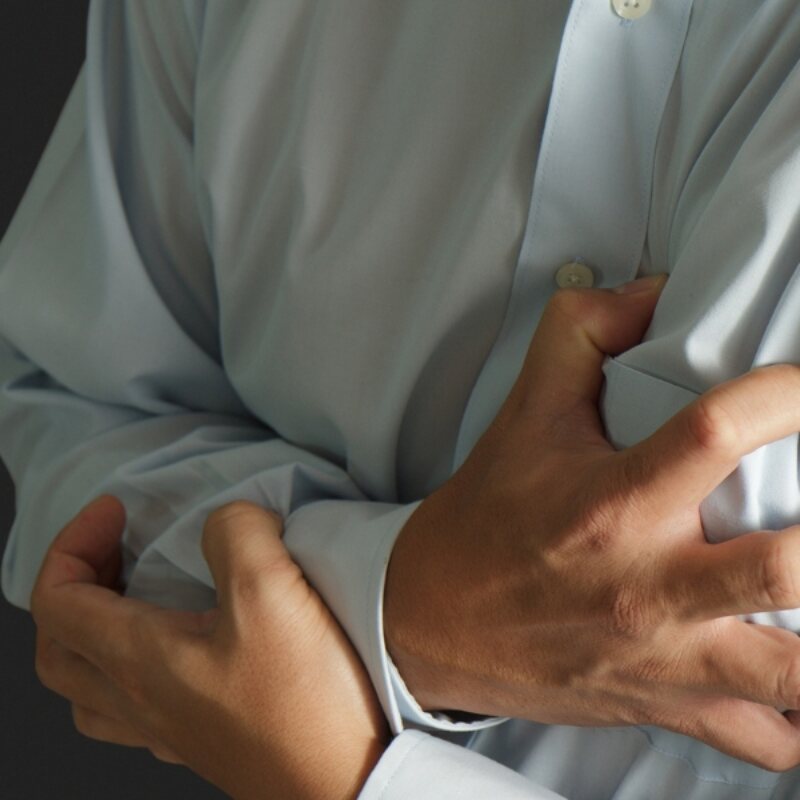
Is It Heartburn or a Heart Emergency?
Both may cause:
- Burning
- Pressure
- Chest discomfort
- Symptoms after eating
Can Anxiety or a Panic Attack Cause Chest Pain?
Why it can be hard to tell the difference
- Panic symptoms and heart symptoms can feel very similar
- Anxiety and a heart or lung problem can happen at the same time
- A history of panic attacks doesn’t rule out a new heart problem
- An EKG and blood tests can help rule out serious causes
Chest Pain Questions, Answered
When should I go to the ER for chest pain?
Can an ER tell if chest pain is a heart attack?
Should I go to the ER if chest pressure comes and goes?
- New or unexplained
- Becoming more frequent or stronger
- Triggered by activity or occurring at rest
- Accompanied by shortness of breath, sweating, nausea, or dizziness
- Spreading to the arm, jaw, neck, or back
Should women go to the ER for unusual chest discomfort?
What does chest pain radiating to the arm or jaw mean?
What should I do if I am not sure whether chest pain is serious?
When Should You Call 911 Instead of Driving to the ER?
Call 911 for:
- Suspected heart attack
- Severe or crushing chest pressure
- Severe difficulty breathing
- Loss of consciousness
- Severe weakness or collapse
- Chest pain with stroke signs, such as facial drooping, arm weakness, or slurred speech
- Severe allergic reaction affecting breathing
- Rapidly worsening symptoms
ER vs Urgent Care for Chest Pain: Where Should You Go?
Call 911
- Suspected heart attack
- Severe, crushing, or squeezing chest pressure
- Severe difficulty breathing
- Fainting, collapse, or confusion
- Chest pain with stroke symptoms
Go to the ER
- New, unexplained, or worsening chest pain or pressure
- Chest pain with shortness of breath, sweating, nausea, or dizziness
- Pain spreading to the arm, jaw, neck, shoulder, or back
- Chest pain with known heart disease or risk factors
- Chest pain after a significant injury
Urgent Care — Only If Clearly Minor
- Mild chest-wall soreness after a known minor strain
- Mild discomfort from coughing with a cold, without breathing difficulty
- Symptoms already evaluated with a known, non-serious cause
Why Not Urgent Care for Chest Pain?
24/7 Chest Pain Emergency Evaluation in Houston
Emergency Physician Evaluation
EKG / ECG Testing
Laboratory Testing
Digital X-ray
CT Imaging
Emergency Treatment
Chest Pain ER Near Houston Heights
Houston, TX 77018
If you are searching for:
- Chest pain ER near me
- Emergency room for chest pain
- Chest pressure emergency care
- Houston ER for chest pain
- Emergency room near Houston Heights
- ER for chest pain and shortness of breath
Serving Houston Heights and Nearby Neighborhoods
Chest Pain ER — Frequently Asked Questions
Yes, if your chest pain is new, severe, unexplained, or getting worse—especially with shortness of breath, sweating, nausea, dizziness, fainting, or pain spreading to the arm, jaw, shoulder, neck, or back. How the pain feels can’t reliably tell you its cause, so when in doubt, get checked. For a suspected heart attack or life-threatening symptoms, call 911.
For new, severe, unexplained, or worsening chest pain — or chest pain with shortness of breath, sweating, nausea, dizziness, or pain spreading to the arm or jaw — go to the emergency room. Most urgent care clinics are not equipped to fully evaluate a possible heart or lung emergency. Urgent care may be reasonable only for mild, clearly minor discomfort, such as soreness after a known muscle strain. If you are unsure, choose the ER.
Yes, it can be. Many people having a heart attack feel pressure, squeezing, heaviness, tightness, or fullness rather than pain. Chest pressure deserves prompt evaluation when it’s new or unexplained, or when it comes with shortness of breath, sweating, nausea, dizziness, or weakness.
It can be. Chest pain with shortness of breath may point to a heart attack, a blood clot in the lungs, a collapsed lung, or pneumonia, so it should be evaluated promptly. For severe trouble breathing or other life-threatening symptoms, call 911 immediately.
Yes. Heartburn and heart-related chest symptoms can feel similar, and both may cause burning, pressure, or discomfort — sometimes after eating. Because these symptoms overlap, new or concerning chest pain should not automatically be assumed to be acid reflux. When chest pain is new, severe, or unexplained, seek emergency care.
Yes. A 12-lead EKG is one of the first tests used to evaluate chest pain. It records your heart’s electrical activity and can show signs of a heart attack or an abnormal rhythm. Whether you need one depends on your symptoms and the physician’s assessment.
Yes. Blood tests, including troponin—a marker of heart muscle injury—can be performed on site. Your physician decides which tests you need based on your symptoms and exam.
Yes. The Heights Emergency Room is open 24 hours a day, 7 days a week — including nights, weekends, and holidays — for emergency evaluation.
No. No appointment or referral is required for emergency evaluation, and walk-ins are welcome 24/7.
Testing depends on your symptoms and history, but an emergency evaluation for chest pain commonly includes an EKG, blood tests such as troponin, and sometimes a chest X-ray or CT scan. The emergency physician interprets these results together with your history and physical examination. Not every test is needed for every patient; testing is chosen based on what is medically appropriate.
Yes, anxiety and panic attacks can cause chest pain or tightness, a racing heartbeat, shortness of breath, and dizziness. However, these symptoms overlap with heart and lung emergencies, and both can occur at the same time. New, severe, unexplained, or worsening chest pain should not be assumed to be anxiety until a medical evaluation has ruled out more serious causes.
Chest pain during or after exercise should be taken seriously, especially if it is new, comes on with less exertion than before, or occurs with shortness of breath, sweating, nausea, dizziness, or pain spreading to the arm or jaw. Exertion increases the heart’s demand for oxygen and can reveal an underlying heart problem. Stop the activity and seek emergency evaluation if symptoms are severe, persistent, or worsening.
Yes, chest pain with dizziness, lightheadedness, or fainting can be serious and should be evaluated promptly. This combination may point to a heart rhythm problem, reduced blood flow, a blood clot in the lungs, or another condition affecting circulation. Anyone who has fainted, feels confused, or cannot stay steady should not drive themselves; emergency medical services are the safer option.
Chest pain accompanied by cold sweating or nausea deserves prompt attention, because this combination can occur with serious heart-related conditions. These symptoms are not always caused by the heart, but they should not be ignored. If chest pain occurs with sweating, nausea, shortness of breath, or pain radiating to the arm or jaw, seek emergency evaluation.